


Bring Five or Fewer Pet Birds into the United States
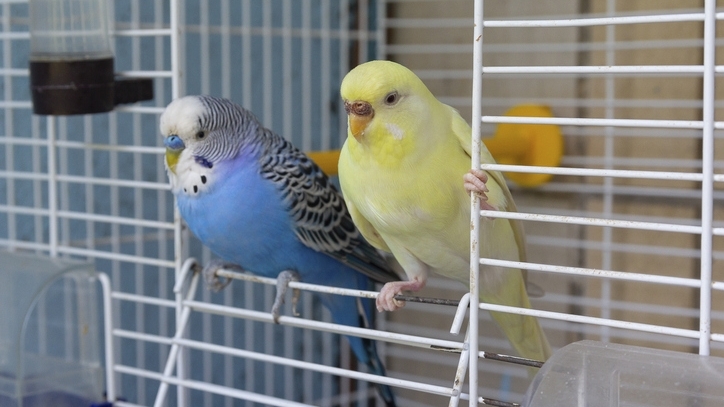
This page will guide you through the requirements for bringing pet birds into the United States from another country.
A shipment of pet birds is defined as five or fewer birds brought into the United States that aren't intended for resale and are not a poultry species.
Carefully read ALL requirements on this page.
Your pet bird may be refused entry into the United States if you fail to meet these import requirements. USDA is one of several U.S. agencies that regulate the entry of pets into the United States. It is important that you notify and coordinate with all responsible government agencies.
Canadian Travel—By Land
Pet birds starting travel in Canada with destination of Alaska, U.S. must email the U.S. Alaska Import Manager at vs.sumas.poe@usda.gov or vs.nbp@usda.gov or call 360-988-5715 for detailed instructions on port passage.
Shipments starting travel in the lower 48 States or the Alaskan state (of the United States), transiting Canada with the final destination of Alaska or the lower 48 States, must contact vs.sumas.poe@usda.gov or vs.nbp@usda.gov, or call 360-988-5715 to obtain detailed instructions for transiting Canada into Alaska.
As of February 19, 2018, all U.S.-origin pet birds weighing more than 100 grams (roughly the size of a clenched fist), except those traveling to the United States from Canada, must be identified by either a microchip, leg band, or tattoo to qualify for home quarantine upon returning to the United States from HPAI-free countries.
Travel Requirements
The import requirements for pet bird(s) include:
- USDA import permit
- Veterinary export health certificate
- USDA port inspection
- Import quarantine
The U.S. Fish and Wildlife Service may also regulate pet bird imports. All shipments should be cleared with U.S. Customs and Border Protection (CBP) upon arrival in the United States. CBP Link is available to facilitate pet bird’s CBP agriculture inspection. Importers may request an inspection, upload required documentation, and view the status and details of the inspection before arrival using the app.
The CBP One Mobile Application is available to expedite pet bird’s CBP agriculture inspection. Importers may request an inspection, upload required documentation, and view the status and details of the inspection before arrival using the app.
Use the Veterinary Services Permitting Assistant (VSPA) to confirm your live animal import permit requirements. Select the "Live Animals" tab. The VSPA will provide you with a summary of required import documents, including permit applications, certificates, informational letters, and more.
- Importers should apply for an import permit online using APHIS eFile. This will help expedite the entire permitting process and enable users to track the status of their permits, confirm receipt, and easily renew or amend existing permits. For more information on import permit application, see Animal Health Permits.
- Importers must submit the import permit application at least 7 business days prior to shipping the birds. You need to know your route of travel and specify a travel date before applying.
- The original import permit is valid for 30 days and must accompany all pet bird shipments.
For questions about import permits or permit applications:
Live Animal Import Permit Team
Email: laipermits@usda.gov
Phone: 301-851-3300
- Pet birds from Canada, when free of HPAI or Newcastle disease, and U.S.-origin pet birds that have resided outside the United States for less than 60 days, do not need a foreign health certificate.
- All other pet birds imported from any region of the world must be accompanied by a health certificate in English or with English translation that is:
- Issued by a salaried veterinarian of the national government of the exporting region, or
- Issued by a certifying official and
- Endorsed by the competent authority of that country.
- Any allowable or required deviations of endorsement must be specified on the import permit.
- Exporting countries may use the model health certificates available below or use their own document as long as it contains U.S. import health certificate requirements.
- Model health certificates:
- Pet birds from HPAI-affected country or zone:
- Avian-Pet Birds-HPAI-Affected Countries-Model Health Certificate (698.1 KB) | August 2026
- Pet birds from HPAI-free country or zone:
- Avian-Pet Birds-HPAI-Free Countries-Model Health Certificate (816.06 KB) | August 2026
- United Kingdom:
- 4948EHC_V7.pdf (publishing.service.gov.uk)
- Canada (if affected with HPAI or Newcastle disease):
- Avian - Pet Birds - Canada - Negotiated Health Certificate (132.04 KB) | February 2026
- Pet birds from HPAI-affected country or zone:
- Pet bird shipments must enter the United States through designated or limited ports where a USDA port veterinarian is available for inspection. If pet birds attempt to enter the United States at another port, they will be refused entry by U.S. Customs and Border Protection (CBP) personnel.
- A USDA port veterinarian must inspect the pet bird(s) at the U.S. port of entry, unless otherwise indicated on the U.S. import permit.
- The importer must arrange for inspection at least 3 business days in advance by contacting the USDA port veterinarian listed on the import permit, including pet bird importers entering the United States at a land border port.
- The USDA port veterinarian will visually inspect the shipment, export health certificate, and U.S. import permit. View user fee rates for inspection services.
- Most pet birds require a 30-day quarantine with mandatory testing for HPAI and Newcastle disease.
- Canadian pet birds will not require a 30-day quarantine unless Canada is affected with HPAI or Newcastle disease and a pet bird originates from or transits through a zone established by CFIA due to HPAI or Newcastle disease. Those will need to undergo a 30-day quarantine at a U.S. Federal quarantine facility.
- U.S.-origin birds returning from HPAI-free countries and zones that have resided outside the United States for less than 60 days will not need to undergo any quarantine.
- Quarantine must occur at a U.S. Federal quarantine facility, except for U.S.-origin pet birds returning from an HPAI-free country that are eligible for home quarantine.
- USDA port personnel who conducted the initial inspection at the U.S. port of entry, along with the importer, will take the bird from the port of entry to the Animal Import Center. USDA port personnel will explain in detail the quarantine and testing procedures.
- Importers should make reservations directly with the USDA Animal Import Center of choice before the shipment arrives. USDA must confirm the reservation before issuing the import permit.
- Fees include, but are not limited to, port inspection, laboratory testing that occurs during quarantine, and the quarantine stay. View user fee rates for inspection services. The Animal Import Center will provide an estimate of the total quarantine costs.
USDA Animal Import Centers
For quarantine-related questions, contact one of the following USDA Animal Import Center quarantine facilities:
Miami Animal Import Center
USDA-APHIS-VS
6300 NW 36th St.
Miami, FL 33122
Port of Entry: Miami International Airport
Species Received: Pet birds and shipments of commercial birds
New York Animal Import Center
USDA-APHIS-VS
474 International Blvd.
Rock Tavern, NY 12575
Port of Entry: JFK International Airport
Species Received: Birds, poultry, equines, ruminants, swine, and certain zoo animals
Home Quarantine
U.S. origin pet birds returning from an HPAI-free country that have resided outside the U.S. for more than 60 days may qualify for home quarantine:
- The import permit will list the home quarantine location. Home quarantine is approved through eFile when the permit is issued, as long as the bird arrives with compliant import documentation and passes the port inspection. The quarantine cycle begins when the pet bird leaves the port of entry for home and continues for at least 30 days.
- The pet bird(s) will be tested twice during quarantine for HPAI and Newcastle disease. Both sets of samples must have negative results before the bird(s) will be released from home quarantine.
- USDA port personnel will conduct an initial inspection at the port of entry and take the first set of samples. The importer must sign an Agreement of Pet Bird Owner (VS Form 17-8) (128.93 KB) after the initial inspection and sample collection.
- A USDA veterinarian will visit your home to collect the second set of samples from your bird(s) for testing. You should be prepared to restrain your bird for the inspection and sample collection.
- Fees for the home quarantine, home inspection and testing, and port of entry inspection are paid at the time of permit application. If importers arrive at the U.S. port of entry outside regular business hours, an additional fee at the time of arrival will be charged.
Land Ports
- Houlton, ME
- Highgate Springs, VT
- Alexandria Bay, NY
- Niagara Falls, NY/Lewiston Bridge, NY
- Detroit, MI
- Port Huron, MI
- Pembina, ND
- Dunseith, ND
- Portal, ND
- Raymond, MT
- Sweetgrass, MT
- Eastport, ID
- Sumas WA
Limited availability based on staffing and additional user fees
Oroville, WA
USDA Transit Process
- Pet bird(s) that originate from or transit an HPAI-affected region may not transit the United States en route to a third country destination.
- Eligible pet birds transiting the United States from the exporting country to a third country destination must be accompanied by a USDA transit permit (211.74 KB).
- The transit permit application process is the same as the import permit application process (see USDA Import Permit section). Denoting the route of travel on the application distinguishes the type of permit requested.
- USDA oversees transit shipments while they are in the United States. The importer must arrange for USDA services at least 72 hours in advance by contacting the USDA port veterinarian whose contact information is listed on the transit permit.
- The importer must submit a contingency plan with the permit application and the request for service at the U.S. transit port.
- The transit permit lists any special instructions for the importer and port staff. For more information, see VSG 13404.2 Transit Shipments of Live Animal Commodities (479.88 KB) and Notice Regarding APHIS Live Animal Import and Third-Country Import Transit Permits (272.29 KB).
Transiting shipments may require monitoring by USDA upon arrival at the first port of entry.
Designated Ports
California: Los Angeles
Florida: Miami
New York: New York
Limited Ports
Alaska: Anchorage and Fairbanks
California: San Diego
Florida: Jacksonville, Port Canaveral, St. Petersburg-Clearwater, and Tampa
Georgia: Atlanta
Hawaii: Honolulu (importer should check with State veterinarian if a State quarantine is also required)
Illinois: Chicago
Louisiana: New Orleans
Maryland: Baltimore
Maine: Portland
Minnesota: Minneapolis
Montana: Great Falls
Kentucky: Covington
Ohio: Greater Cincinnati International Airport
Oregon: Portland
Puerto Rico: San Juan
Texas: Galveston and Houston
Washington: Seattle, Spokane, and Tacoma
Home Quarantine
U.S.-origin pet birds issued with a U.S. health certificate (must show identification) returning into the United States may qualify for home quarantine. The health certificate should be attached in the import permit application.
U.S. State and Territory Requirements
Find U.S. State and Territory Requirements
APHIS doesn't regulate the interstate movement of pets by their owners. Domestic movement requirements are set by the receiving State or Territory. To learn more about the requirements for moving your pet to another State or Territory, select your destination State or Territory from the list below.
If you have questions or need clarification on any of the requirements, or your destination State or Territory is not in the list, please contact the State animal health official for that State or Territory.
Airline Requirements
Check with your airline to determine whether they have any additional requirements.
Questions?
View answers to frequently asked questions or contact us for help.
Live Animal Import Permit Team
Contact APHIS' Live Animal Import Permit team if you have questions before you apply for a permit.
For questions about import permits or permit applications:
Live Animal Import Permit Team
Email: laipermits@usda.gov
Phone: 301-851-3300
APHIS Port Services
For questions about import inspections at a port of entry, quarantine of animals arriving from a foreign country, or requesting approval as a private animal import quarantine facility, contact APHIS Port Services.
Live Animal Import and Export
Contact APHIS' Live Animal Import and Export team for questions about current trade restrictions, or other questions not related to permits.
For general questions related to the import of a live animal:
Live Animal Import and Export
Email: laie@usda.gov
Phone: 301-851-3300