



Chrysanthemum White Rust
Last Modified: November 09, 2026
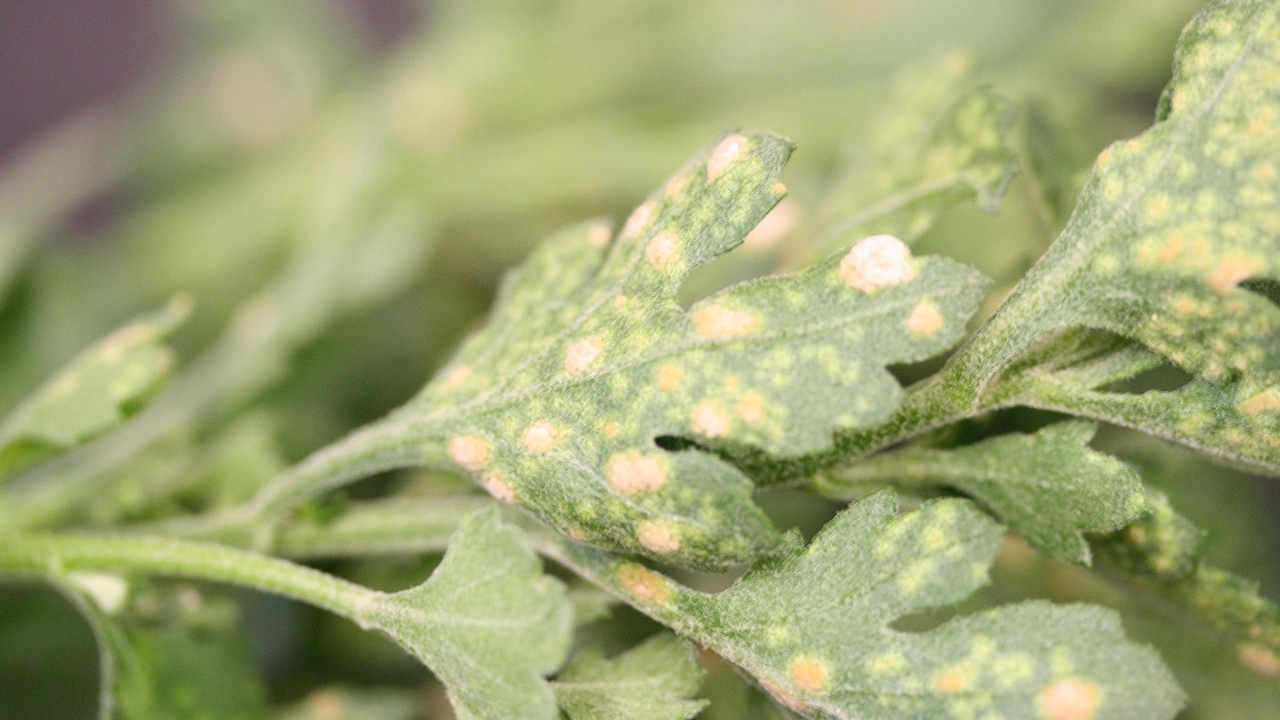
Karen Snover-Clift, Cornell University, Bugwood.org
Chrysanthemum white rust (CWR) is a plant disease caused by the fungus Puccinia horiana. The disease impacts certain plant species in the genus Chrysanthemum. Best management practices can effectively control this disease.
During hot and dry conditions, infected plants may not be symptomatic. Signs of disease usually appear during cooler, wet weather. Here's what to look for:
- Spots
- Small white or yellow spots, up to 4 mm wide, may be found on the upper surface of the leaf. These slightly dimpled spots become brown over time.
- Pustules
- These are light brownish yellow to pink-colored but become white as they age. Pustules form on the underside of the leaf, beneath the small spots. They're most common on young leaves and flower bracts but can be found on any green tissue and flowers.
Best management practices include:
- Buying plants from reputable sources
- Using proper cultural techniques
- Scouting for disease symptoms
- Sanitation
- Applying fungicide (This will not eliminate the disease, but it can keep it from spreading. Make sure the fungicide is labeled for use against CWR in your State; follow all label directions.)
- Worker training and education
Options for managing CWR include:
- Removing infected plants (including roots)
- Placing diseased plant material in plastic bags to keep spores from spreading
- Disposing infected plants or plant material in municipal waste; do not compost
- Applying fungicide (This will not eliminate the disease, but it can keep it from spreading. Make sure the fungicide is labeled for use against CWR in your State; follow all label directions.)
- Maintaining strict sanitation in greenhouses and nurseries to prevent CWR introduction and spread
Regulatory Information
CWR is established in the United States and is no longer regulated as a quarantine pest. As a result, an eradication policy for this disease is no longer technically or economically justified.
- Title 7, Code of Federal Regulations, Part 319.37 and 319.74
- Proposed Rule: Deregulation of Chrysanthemum White Rust and the Importation of Chrysanthemum spp. Cuttings, and In Vitro Plantlets, and Synonymous Genera From Certain Countries Into the Continental United States | April 17, 2023
- Final Rule: Cut Flowers Regulations; Removal of Chrysanthemum White Rust-Related Provisions (91 FR 64253) | October 8, 2026 (effective November 9, 2026)
Contact Us
For Domestic Issues