



Yellow-Legged Hornet
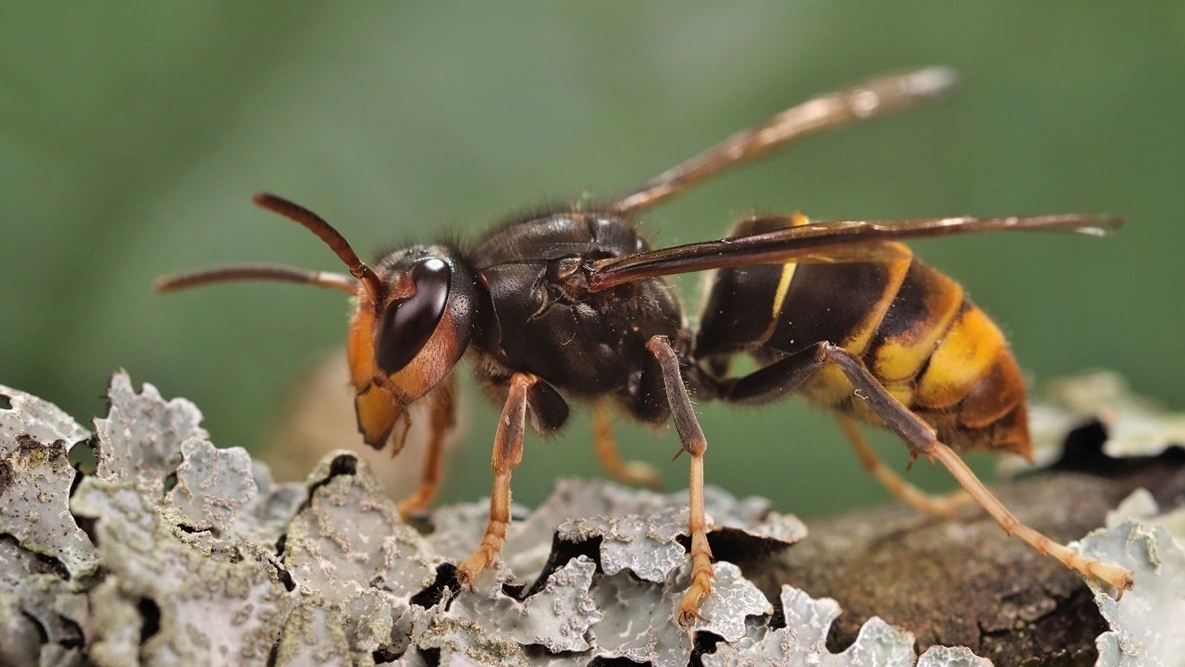
A yellow-legged hornet on bark
The yellow-legged hornet (Vespa velutina) is an invasive wasp species that builds large paper nests above ground, often in trees or on structures such as barns, garages, and sheds. Nests can hold up to 6,000 workers and grow as large as a beach ball later in the season. Yellow-legged hornets prey on insects, including honey bees. If they become established in the United States, they could seriously affect honey bee populations, reduce pollination, and impact agriculture.
Yellow-legged hornets have been detected in Georgia, South Carolina, and North Carolina. State partners and APHIS continue to conduct trapping, surveillance, and nest removal in affected and neighboring counties. The first U.S. detection occurred in Savannah, GA, in 2023. The initial nest was reported to the Georgia Department of Agriculture and eradicated 14 days later.
Yellow-legged hornets are not native to the United States and can be confused with other common wasps or hornets.
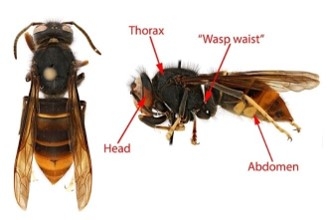
Key features include:
- Size is ¾–1 inch long
- Mostly dark body with banded abdomen
- Distinct yellow legs
- Large paper nests in trees or building overhangs
Life Cycle
Yellow-legged hornets follow a yearly cycle:
- Spring: Queens emerge from winter shelter and begin building small nests.
- Summer: Workers hatch and expand the nest; colonies grow in size.
- Late Summer–Early Fall: Colonies produce males and new queens; hornets may attack honey bee hives for protein.
- Fall: Males leave first; queens follow to mate.
- Winter: Mated queens overwinter; workers and the old queen die.
Where You Might See Them
- High tree branches
- Building overhangs, rooflines, barns, sheds
- Flowering plants and areas where bees forage
- Near apiaries or backyard beehives
If you think you see one:
- Watch from a safe distance
- Do not disturb the hornet or nest
- Take a photo only if it is safe to do so
- Record the exact location
Look-Alike Species
Several native insects resemble the yellow-legged hornet but are common and often beneficial. These include:
- Bald-faced hornet
- Elm sawfly
- European hornet
- Great golden digger wasp
- Hoverfly
- Northern giant hornet
- Western cicada killer
- Paper wasps
- Yellowjackets
Lookalikes Photo Gallery
Tap any image to view larger size.
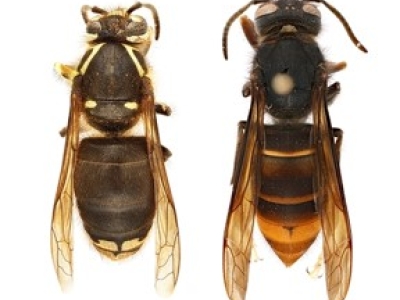
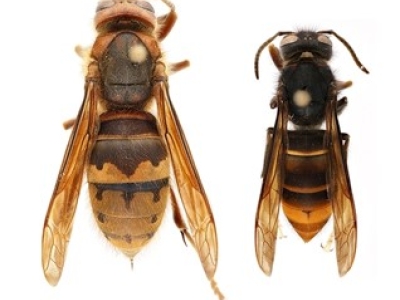
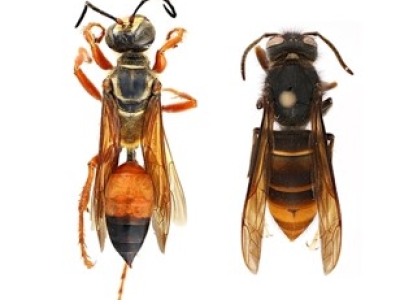
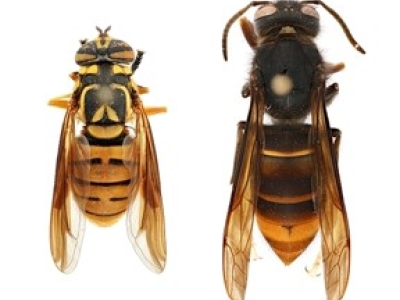
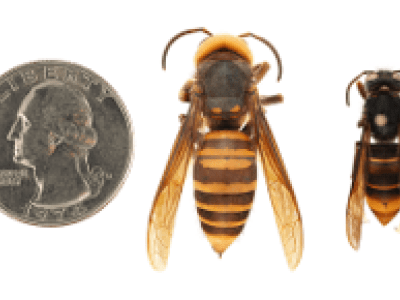
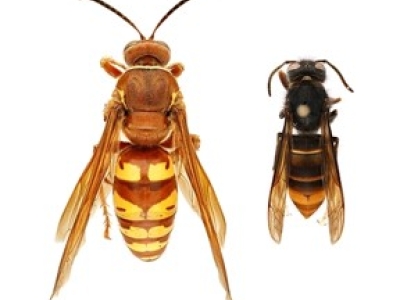
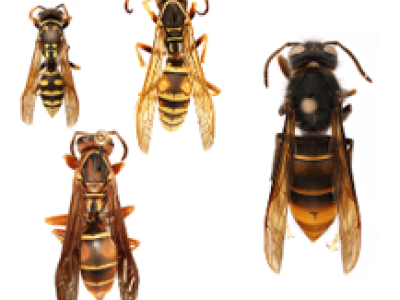
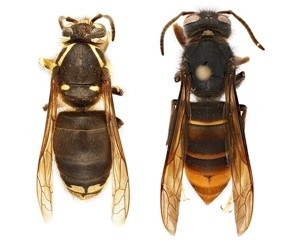
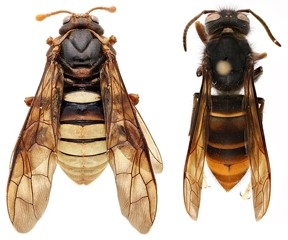
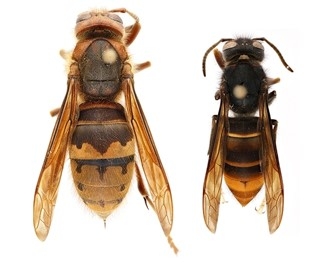
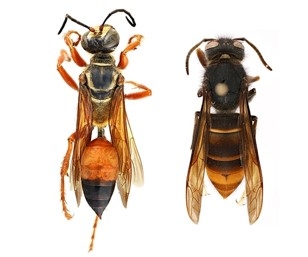
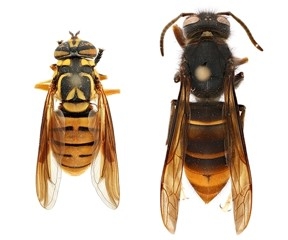
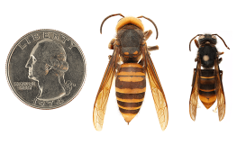
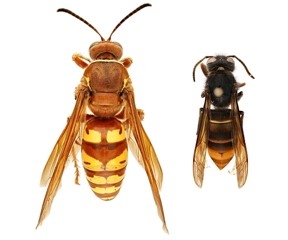
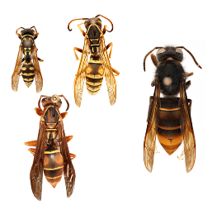
Bald-faced hornet (left) compared to yellow-legged hornet (right)
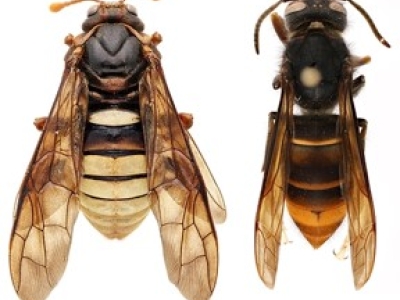
Elm sawfly (left) compared to yellow-legged hornet (right)
European hornet (left) compared to yellow-legged hornet (right)
Golden digger wasp (left) compared to yellow-legged hornet (right)
Hoverfly (left) compared to yellow-legged hornet (right)
Northern giant hornet (left) compared to yellow-legged hornet (right)
Western cicada killer (left) compared to yellow-legged hornet (right)
Various species of paper wasps (left) compared to yellow-legged hornet (right)
Preventing the spread of the yellow-legged hornet starts with early detection, safe reporting, and awareness of where this pest is most likely to appear. Yellow-legged hornets can threaten honey bees, pollinators, and agriculture, so identifying them quickly is essential. Here are steps you can take to help prevent this pest from spreading:
- Know what to look for. Yellow-legged hornets are mostly dark with a banded abdomen and distinct yellow legs. Their paper nests may be found in trees, building overhangs, barns, sheds, and rooflines.
- Stay alert around trees and structures. Watch for hornets hovering near flowers, apiaries, or honey bee colonies—these areas are common feeding sites.
- Keep a safe distance from nests. Never disturb a hornet or a potential nest. Move away slowly and report what you see.
- Take a photo only if safe to do so. Photos help experts confirm sightings, but your safety should always come first. Record the exact location of the hornet or nest.
- Report suspected sightings right away. Early reports help trained responders locate and remove nests before the hornet spreads to new areas. Georgia, South Carolina, and North Carolina have dedicated online reporting forms.
- Let trained professionals handle nests. Only State or Federal responders should remove or treat yellow-legged hornet nests. Attempting removal yourself is dangerous and may accidentally help the hornet spread if the queen escapes.
APHIS and State agencies are actively increasing traps and surveys, locating and removing nests, using bait stations and drone tools, and working closely with local responders, but public vigilance is critical. Reporting sightings quickly helps prevent this invasive hornet from becoming established.
Federal and State partners use targeted, science‑based methods to find and remove yellow-legged hornet nests. When a nest is confirmed, trained teams safely eliminate it using approved methods to prevent the nest from producing new queens. Because these hornets can harm honey bees, pollinators, and agriculture, rapid response is essential.
Do not attempt to remove a nest yourself. Only trained State or Federal responders should handle hornet nests. Removing a nest without proper equipment and training is dangerous and can help the hornet spread to new areas.
Report Yellow-Legged Hornet
Reports from the public help experts find nests before hornets spread. Early reports lead to faster treatment and better protection for beekeeping and agriculture. If you think you have seen a yellow-legged hornet or nest, report it right away.
- Georgia: Call 404-656-3600, email yellow.legged.hornet@agr.ga.gov, or use the Georgia Department of Agriculture’s online form.
- South Carolina: Call 864-646‑2140 or use the State’s online form.
- North Carolina: Use the State’s online form.
- All other States: Contact your State Plant Regulatory Official or State Plant Health Director.
Controlling Yellow-Legged Hornets
Yellow-legged hornets have been detected in Georgia, South Carolina, and North Carolina. Federal and State partners are conducting intensive trapping, field surveys, and rapid nest removal to prevent the hornet from establishing and spreading. As monitoring continues, response activities may expand into additional areas if new detections occur.
We are working closely with State partners to detect, control, and prevent the spread of the yellow-legged hornet in the United States. This invasive hornet preys on honey bees and other pollinators, which are essential for agriculture and healthy ecosystems. If allowed to spread, the yellow-legged hornet could threaten beekeeping, crop pollination, and local environments. Early detection is critical to avoid ecological and economic losses.
APHIS and State agencies are actively:
- Increasing traps and surveys.
- Locating and removing nests.
- Using bait stations, surveys, and mapping tools.
- Coordinating closely with local responders.
- Asking the public to report sightings early.
The public plays a key role in detecting this pest. Stopping its spread depends on people reporting potential sightings quickly and safely.