If you care for pigs, you know they're more than just animals in a pen. Whether they're part of your farm, your family, or both, you want to do everything you can to keep them happy and healthy. Fortunately, many of the best ways to protect them start with simple, everyday habits.

These everyday habits are also part of something called biosecurity: the steps you take to keep disease away from your pigs and prevent it from spreading. You may already be practicing biosecurity more than you realize.

Here are seven ways to keep your pigs healthy and protected.

1. Keep feed and water areas clean

Store feed where wildlife can't get into it, clean up spills right away, and keep trash and food waste away from your pigs. A clean feeding area is easier to manage and less likely to attract rodents and other wildlife, both of which can carry diseases from other areas.

2. Keep pens and equipment clean

Boots, buckets, brushes, tools, and feeding equipment all come into regular contact with your pigs. Clean these items often, and take extra care to clean and disinfect anything that's been around other pigs or areas on your property before bringing it home or moving it to another pen. Diseases can travel on contaminated equipment, clothing, and footwear. So, keeping them clean is a simple but important biosecurity habit that helps protect your pigs.

3. Know what's normal for your pigs

Caring for pigs every day means you get to know their normal habits: how much they eat, how active they are, how they breathe, and how they look. Watch for changes like poor appetite, unusual weakness, fever, vomiting, diarrhea, or trouble breathing, and call your veterinarian if something seems off.

4. Pay attention to who and what comes onto your property

Visitors, vehicles, equipment, and other animals can all bring disease to your farm. Simple habits like asking visitors to disinfecting footwear before entering animal areas, cleaning shared equipment, and keeping new pigs separated for 30 days can go a long way toward reducing the spread of disease.
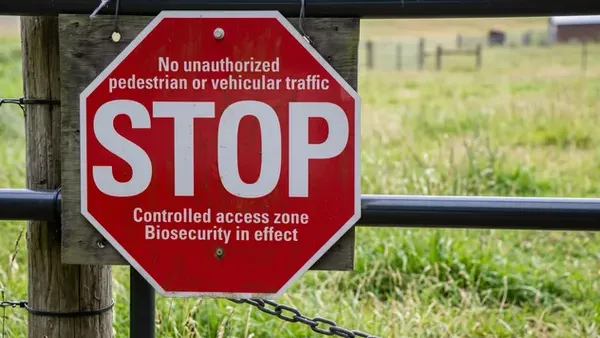
A stop sign on a gat in front of a field. The sing says "No unauthorized pedestrian or vehicular traffic. Stop. Controlled access zone. Biosecurity in effect."

5. Keep wildlife away from your pigs

Check your pens and fencing for places where wild animals could get close to your pigs. Preventing contact with feral swine is especially important because they can carry diseases that affect domestic swine. Keeping this line of separation can help protect against foreign animal diseases like African swine fever (ASF) if it were ever found in the United States.

6. Take extra care when you travel with your pigs

Fairs, shows, and sales mean contact with new animals and environments. Avoid sharing equipment; when possible, keep your pig's area clean while you're away, and clean and disinfect your gear before using it around pigs at home again. 

7. Make your veterinarian part of your routine

Find and create an established relationship with a veterinarian who can see swine before you need their expertise. Your veterinarian can help you spot problems early and establish good practices for cleaning, introducing new animals, outdoor access, and other health and disease-prevention needs.

Small habits, healthier pigs

Cleaning equipment regularly, securing feed, paying attention to wildlife and visitors, and knowing what's normal for your pigs can contribute to healthier animals. Together, these everyday biosecurity practices also help protect pigs from diseases we want to keep out of the United States.

One of those diseases we mentioned earlier is African swine fever. ASF is a deadly disease that affects domestic and wild pigs but does not affect people. ASF has never been detected in the United States, and prevention is key to keeping it that way.

The good news is many of the things you already do to care for your pigs are also helping protect them from disease.
Want to see how your routine measures up? Explore Protect Our Pigs resources for small farms and pig owners.

Get Pig Biosecurity Resources

Report Any Signs

Immediately report animals with any signs to State or Federal animal health officials or call USDA for appropriate testing and investigation.

Call USDA at 1-866-536-7593.

Sign Up for Email Alerts!

Stay informed. Get the latest updates on African swine fever.
Sign up now