



Help Detect the Yellow-Legged Hornet—Public Reporting Needed
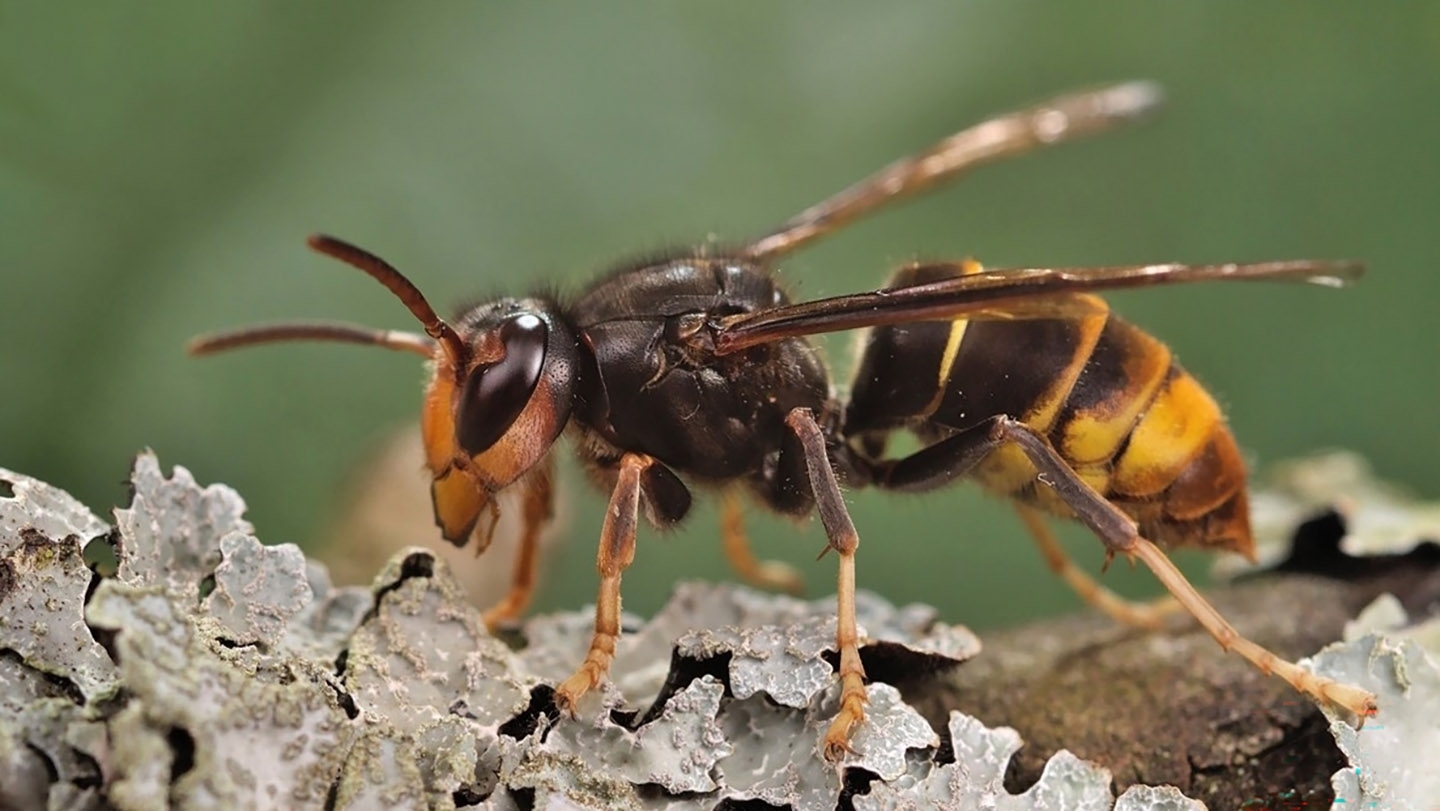
USDA’s Animal and Plant Health Inspection Service (APHIS) is asking residents, beekeepers, and community partners in Georgia, South Carolina, and North Carolina to help detect the yellow‑legged hornet. This invasive wasp preys on honey bees and threatens pollination, agriculture, and local ecosystems. Public reporting is critical to locating nests so they can be removed quickly.
What To Look For
The yellow‑legged hornet is a large, dark hornet with distinct yellow legs. It builds paper nests above ground, often in trees, barns, sheds, or under eaves. Nests may be as small as a tennis ball but can grow to be the size of a beach ball or larger.
How You Can Help
If you think you’ve seen a yellow‑legged hornet or its nest:
- Do not disturb the insect or nest.
- If it is safe, try to take a photo.
- Record the exact location (address or GPS pin).
- Report it directly to your State using the links below.
Report Your Sighting
- In Georgia, call the Georgia Department of Agriculture at (404) 656‑3600, or email yellow.legged.hornet@agr.ga.gov, or use the online Georgia Reporting Form.
- In South Carolina, call Clemson University Department of Plant Industry at (864) 646‑2140 or use the online South Carolina Reporting Form.
- In North Carolina, use the online North Carolina Reporting Form.
- In other States, contact the State Plant Regulatory Official or State Plant Health Director.
Why Reporting Matters
Public reports, especially reports with clear and accurate locations, have already helped authorities locate multiple nests. APHIS and State partners use these reports to confirm sightings, deploy traps, and remove nests before reproductive hornets emerge. Early detection gives responders the best chance of fighting this invasive insect.
Stay Informed
We will continue to share updates through the APHIS website, social media channels, and local outreach. For more information on identification and safety guidance, visit APHIS’ Yellow‑Legged Hornet Web Page.